Wildlife Genetics & Forensic Services

Objectives
List of Services
Government of Assam vide Memo. E. 656643/523 dated 4th August 2025 has notified Wildlife Genetics Laboratory, Aaranyak and Mr. Udayan Borthakur, Director and Head, Wildlife Genetics Division, Aaranyak under Section 329 (4) of BNSS 2023 to facilitate wildlife genetic and wildlife forensic analysis.
01
Species Identification
-
Identification of wildlife species from biological samples. This may include identification of authentic wildlife material such as rhino horn, ivory, snake venom, meat, bone, hair, saliva etc.
03
Parentage Test
-
Parentage testing of captive Asian elephants.
05
Incident Response
-
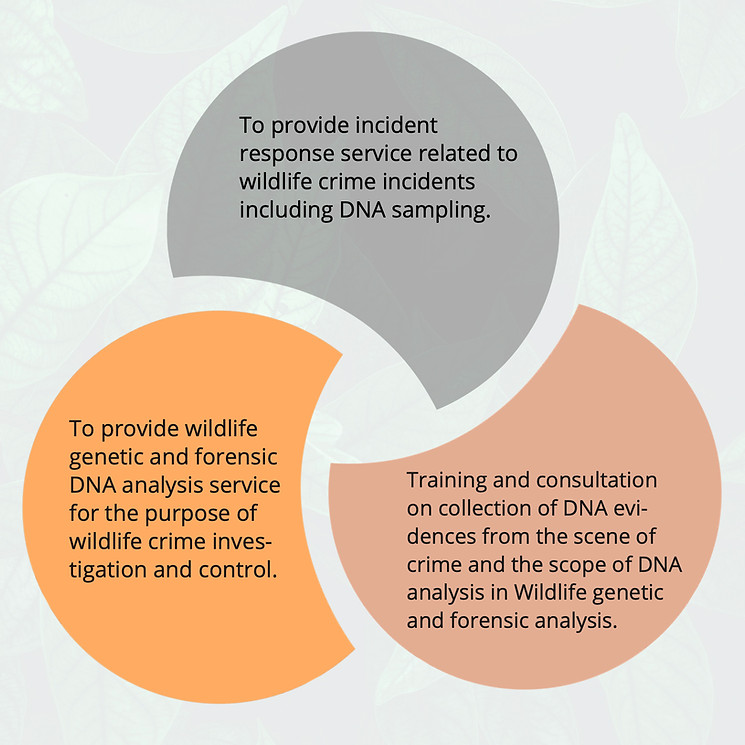
Service related to responding to wildlife crime incidents including:
-
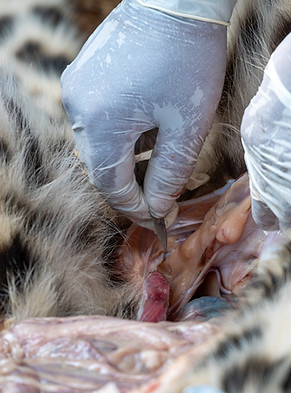
DNA sampling from wildlife crime scene and seizures.
-
Genetic sampling of wildlife articles in govt. repositories etc.
06
Training & Consultation
-
Mentoring various line departments and skill development in:
-
Collection of DNA evidences from the scene of crime
-
Understanding the scope of DNA technology in Wildlife genetic research and forensic analysis
-
Awareness generation on wildlife crime investigation and control through application of DNA and other molecular technology
02
Individual Identification & Matching
-
Individual identification (DNA profiling) and individual matching of samples with scene of crime.
-
Determining number of animals from multiple biological samples (e.g. pieces of bone, teeth, claws etc.).
04
Determining Geographic Source
-
Determining source of origin (currently limited to greater one-horned rhino)
07
Assisting Wildlife Management
-
Various requirements of the Forest Department for wildlife and protected area management, including
-
Development of DNA database for wildlife species.
-
Wildlife population estimation through fecal DNA analysis.
-
Analysis of genetic diversity and genetic connectivity between wildlife populations, inbreeding detection, hybridization detection.
-
Identification of key wildlife source populations and identification of Conservation Significant Units (CSUs).
-
Assessment of wildlife corridors and connectivity between key wildlife habitats.
-
Estimation of population size of various species in the protected areas through DNA analysis.
-
Undertake biodiversity assessment through environmental DNA analysis.
-
Genetic management of captive stock of various wildlife species and scientific planning of conservation breeding, selection of genetic stock, identification of species etc.

